Final Project: The effect of culture on Schizophrenia
By: Janet Rodriguez
 Schizophrenia is a serious mental
disorder that affects about 1% of the world population. Schizophrenia alters
the way people think, feel and act. Individuals often have difficulty
distinguishing between was is real and what is not real. They are also often
unresponsive and may have difficulty expressing normal emotions in social
situations. The symptoms of Schizophrenia appear most often in young people
between the ages of 13-25. For young males, schizophrenia can be detected
earlier than females. Warning sign often include hearing and seeing things that
aren’t there, a constant feeling of being watched, a change is personality or hygiene
appearance, inability to sleep or concentrate, increasing withdraw from social
situations and inappropriate or bizarre behavior. The cause of this particular
disease is still unclear. Some suspected causes of this disease include:
genetics, biology, and/or viral infections and immune disorders. Schizophrenia
is not caused by poor parenting, childhood experiences, or lack of will power
like many people think it is. People with Schizophrenia are not violent and
dangerous to others as many people think they are. The signs of this disease
are different for everyone and may develop slowly over months or years, or they
may appear all at once. Recent studies have found out that Schizophrenia
affects people differently based on their cultural background.
Schizophrenia is a serious mental
disorder that affects about 1% of the world population. Schizophrenia alters
the way people think, feel and act. Individuals often have difficulty
distinguishing between was is real and what is not real. They are also often
unresponsive and may have difficulty expressing normal emotions in social
situations. The symptoms of Schizophrenia appear most often in young people
between the ages of 13-25. For young males, schizophrenia can be detected
earlier than females. Warning sign often include hearing and seeing things that
aren’t there, a constant feeling of being watched, a change is personality or hygiene
appearance, inability to sleep or concentrate, increasing withdraw from social
situations and inappropriate or bizarre behavior. The cause of this particular
disease is still unclear. Some suspected causes of this disease include:
genetics, biology, and/or viral infections and immune disorders. Schizophrenia
is not caused by poor parenting, childhood experiences, or lack of will power
like many people think it is. People with Schizophrenia are not violent and
dangerous to others as many people think they are. The signs of this disease
are different for everyone and may develop slowly over months or years, or they
may appear all at once. Recent studies have found out that Schizophrenia
affects people differently based on their cultural background. 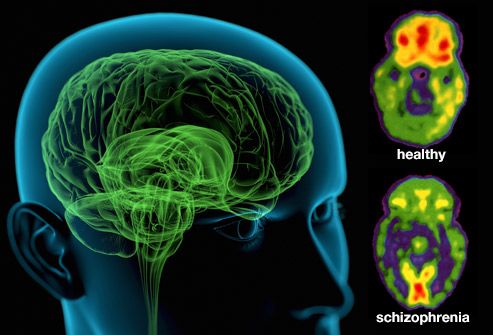
A group of scientist at the World
Health Organization studied the differences between people with schizophrenia
in developed and developing countries, trying to find out if culture played a
role in the development of the disease. The final results showed that the
symptoms and prognosis of the disease differed from country to country. In more
industrialized nations the disease is generally more severe than in developing
countries. This is believed to be true because in developing countries, illnesses
are believed to be caused by a type of supernatural force, therefore there is
no reflection on the diseased person.
Schizophrenic patients have tend to
have delusions that reflect the themes and values of that certain individual’s
culture. For example, a person with Schizophrenia from Ireland would have
delusions of sainthood, because religious piety is valued. The delusions for patients
in America tend to focus more on sinister uses of technology and surveillance. Some
patients might report that they are being spied on by their televisions or that
they are being x-rayed as they walk down the street. In Nigeria mental
illnesses are believed to be cause by evil spirits, therefore the delusions may
take the
 form of witches or ancestral ghosts. In Japan, patient’s delusions
revolve around slander or the fear of being publicly humiliated because the
Japanese prize honor and social conformity. Many behaviors that would be seen
as schizophrenic symptoms to the Western world, are considered are seen as
spiritual delight in developing countries. If a person claimed he was a god on
earth, he would be called delusional in western society but if he did that in
India, he would be considered a spirit medium who is the human incarnation of a
Hindu god. See the difference? Along the same lines, in African cultures,
hallucinations are not always a sign of a mental disease. Shamans, who are
tribal priest, act as intermediaries between the natural and the spiritual
worlds. They are deeply respected for their abilities. These beliefs are
cultural norms for some people and are not considered to be delusions.
form of witches or ancestral ghosts. In Japan, patient’s delusions
revolve around slander or the fear of being publicly humiliated because the
Japanese prize honor and social conformity. Many behaviors that would be seen
as schizophrenic symptoms to the Western world, are considered are seen as
spiritual delight in developing countries. If a person claimed he was a god on
earth, he would be called delusional in western society but if he did that in
India, he would be considered a spirit medium who is the human incarnation of a
Hindu god. See the difference? Along the same lines, in African cultures,
hallucinations are not always a sign of a mental disease. Shamans, who are
tribal priest, act as intermediaries between the natural and the spiritual
worlds. They are deeply respected for their abilities. These beliefs are
cultural norms for some people and are not considered to be delusions.

 |
| A Shaman |
Check out the video below for more information:
Sources Cited (MLA Format)
"Cross-Cultural Variance of Schizophrenia in Symptoms,
Diagnosis and Treatment." GU Journal of Health Sciences. N.p., n.d.
Web. 13 Jan. 2016.
"Hallucinatory 'voices' Shaped by Local Culture,
Stanford Anthropologist Says." Stanford University. N.p., n.d. Web.
13 Jan. 2016.
PBS. PBS, n.d. Web. 13 Jan. 2016.
"Schizophrenia." Mental Health America.
N.p., n.d. Web. 13 Jan. 2016.